


Cookies help us deliver our services. By using our services, you agree to our use of cookies.
Chapter 4. Protocol & Message Formats
The MIL-STD-1553 protocol is strictly Command/Response. This means that data is never just "sent" onto the bus; it is always the result of a specific command initiated by the Bus Controller (BC).
4.1 Word Types
All communication on the bus consists of three distinct types of words. Each word is 20 bits long (3 bits for sync, 16 bits for data, 1 bit for parity).
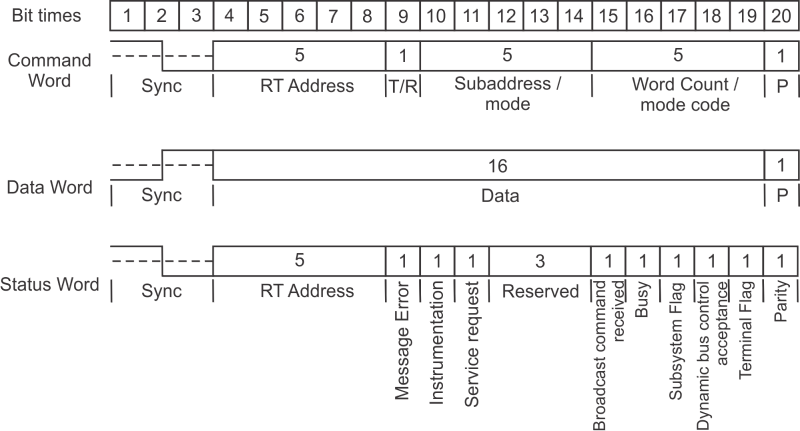
Figure 13 - Word Formats (Command, Data, Status)
(Note: This diagram shows the 20-bit structure including Sync, 16-bit payload, and odd Parity bit for all three word types.)
4.1.1 Command Word
Transmitted only by the Bus Controller. It starts the message transfer.
- Sync: Unique "Command Sync" pattern (3 bit times).
- RT Address (5 bits): Identifies the target Remote Terminal (0-31).
- T/R Bit (1 bit): Transmit (1) or Receive (0).
- Subaddress/Mode (5 bits): Points to a specific location in the RT's memory or indicates a Mode Code (00000 or 11111).
- Word Count/Mode Code (5 bits): The number of data words to follow (1-32) or the specific Mode Code to execute.
- Parity (1 bit): Odd parity.
4.1.2 Status Word
Transmitted only by a Remote Terminal in response to a valid command. It reports the "health" of the RT.
- Sync: Same pattern as Command Word.
- RT Address (5 bits): The address of the RT confirming who is responding.
- Status Bits:
- Message Error: Set if the previous command had an error.
- Instrumentation: Always 0.
- Service Request: Used to ask the BC for service.
- Broadcast Command Received: Set if the previous command was a broadcast.
- Busy: Set if the RT cannot handle data currently.
- Subsystem Flag: Indicates a fault in the attached subsystem.
- Dynamic Bus Control Acceptance: Set if the RT accepts the role of BC.
- Terminal Flag: Indicates a fault within the RT itself.
4.1.3 Data Word
Transmitted by either the BC or RT. Contains the actual information payload.
- Sync: Unique "Data Sync" pattern (opposite polarity to Command/Status).
- Data (16 bits): The application data.
- Parity (1 bit): Odd parity.
4.2 Message Formats
There are several standard message types defined by the protocol. The Holt HI-6130/31 or Mamba family Integrated Terminals handle the sequencing of these messages automatically, requiring only a simple descriptor from the host processor.
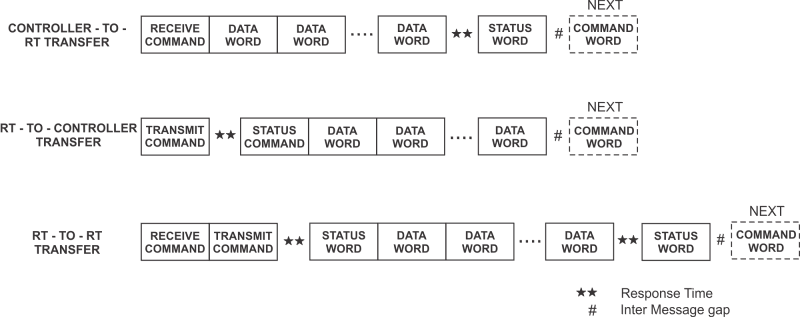
Figure 14 - MIL-STD-1553 Message Formats
(Note: Shows the sequence of Command -> Status -> Data words for the transfers below.)
4.2.1 BC-to-RT Transfer (Receive)
The BC sends data to an RT.
- BC sends: Receive Command + Data Words.
- RT responds: Status Word (after validation)
4.2.2 RT-to-BC Transfer (Transmit)
The BC requests data from an RT.
- BC sends: Transmit Command.
- RT responds: Status Word + Data Words.
4.2.3 RT-to-RT Transfer
The BC commands one RT to send data directly to another RT.
- BC sends: Receive Command (to RT A) + Transmit Command (to RT B).
- RT B sends: Status Word + Data Words.
- RT A sends: Status Word (confirming receipt).
4.2.4 Mode Codes
Mode codes are special management commands (e.g., "Reset Remote Terminal", "Synchronize", "Transmit Built-In-Test"). They use Subaddress 0 or 31.
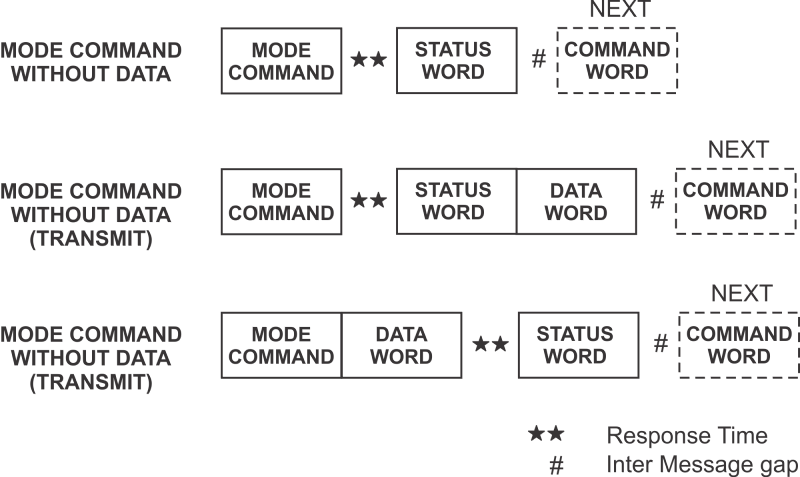
Figure 15 - Mode Command Message Formats
4.2.5 Broadcast Messages
A "Broadcast" is a message sent to Address 31, which all RTs recognize.
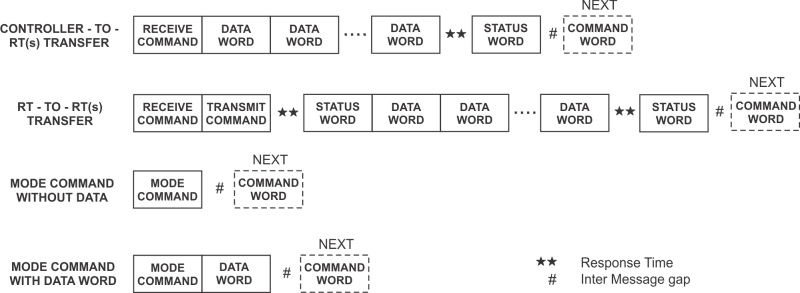
Figure 16 - Broadcast Message Formats
- Critical Note: RTs suppress their Status Word response during a broadcast to prevent a collision of 31 devices trying to talk at once. This means the BC does not get confirmation that the message was received.
4.3 The Holt Advantage: Automated Protocol Handling
In early MIL-STD-1553 designs, the host processor had to manually manage the strict timing windows (e.g. the 4-12 microsecond response time) and bit-level parsing. This consumed significant CPU resources.
Holt’s HI-6130 and HI-6131 revolutionize this by integrating a sophisticated Message Sequencer directly into the silicon.
- Host Interface: The host processor (via SPI or Parallel bus) simply writes a "Descriptor" to the Holt IC's RAM.
- Example: "Send 5 words to RT 3, Subaddress 2."
- Autonomous Execution: The Holt IC handles the entire transaction:
- Generates the Command Word.
- Handles Manchester encoding/decoding.
- Waits for the Status Word response.
- Checks for errors (Parity, Manchester, Response Time).
- Retries automatically if configured (e.g., on a Busy bit or Message Error).
- Interrupts the host only when the message is complete.
This architecture allows the main mission computer to focus on high-level application logic while the Holt "Mamba" or HI-6130/31 handles the critical real-time constraints of the MIL-STD-1553 bus.